
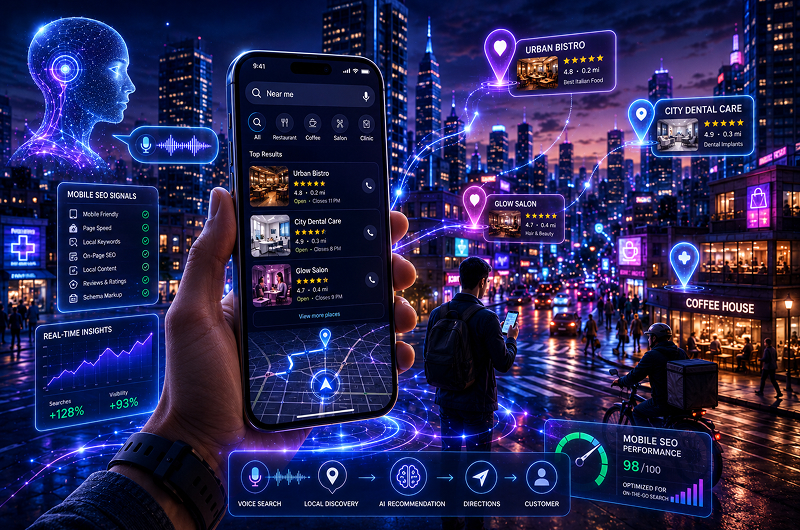
Generic local SEO no longer cuts it in dense urban markets. Hyperlocal strategies targeting specific neighborhoods, streets, and intent signals are now the key to ranking above your competition.
Urban markets are defined by density high concentrations of businesses, consumers, and competition all operating within tight geographic boundaries. In this environment, a generic local SEO strategy one that simply targets “your city” as a location is no longer sufficient. To rank consistently at the top of local search results in 2026, urban businesses need a hyperlocal approach that goes several layers deeper.
Hyperlocal SEO is the practice of optimizing your online presence for highly specific geographic identifiers: neighborhoods, districts, streets, and even individual blocks. Instead of optimizing for “plumber in Los Angeles,” a hyperlocal strategy targets “emergency plumber in Silver Lake” or “licensed plumber near Sunset Boulevard Los Angeles.” These more specific terms face dramatically less competition while attracting searchers with much higher purchase intent.
The foundation of any hyperlocal strategy is location-specific content. Create dedicated pages on your website for each neighborhood, district, or service zone you operate in. Each page should include location-specific keywords, references to local landmarks or community touchstones, and testimonials or case studies from customers in that specific area. Generic content cannot replicate this level of geographic specificity.
Local link building is another cornerstone of hyperlocal SEO. Earning backlinks from neighborhood blogs, community organizations, local news outlets, and city-specific business associations sends powerful geographic relevance signals to search engines. Sponsor a local event, contribute an expert quote to a neighborhood publication, or partner with complementary local businesses to generate these valuable local links.
Your Google Business Profile’s service area settings also play a significant role. Be precise and strategic about the neighborhoods and zip codes you list as your service area. Overly broad service areas dilute your geographic relevance, while well-defined areas reinforce your position as a hyperlocal authority.
Finally, consistent NAP citation data in neighborhood-level directories like Urban Trust Net reinforces your geographic relevance to search engines and gives you additional discovery touchpoints in the specific communities you serve.
Frequently Asked Questions
Q: What’s the difference between local SEO and hyperlocal SEO?
A: Local SEO targets broader city or regional geographic areas, while hyperlocal SEO focuses on specific neighborhoods, zip codes, or districts within those areas. Hyperlocal strategies are more competitive in dense urban markets where city-level targeting alone is too broad.
Q: How many neighborhood pages should my website have?
A: Create a page for each distinct geographic area you genuinely serve. Quality always trumps quantity a well-researched, locally relevant 500-word page outperforms a generic 100-word location stub in every meaningful SEO metric.
Q: Do neighborhood-specific directory listings help with hyperlocal SEO?
A: Yes. Listings in platforms that serve specific urban markets provide targeted geographic citations that reinforce your relevance for neighborhood-level searches both in traditional search results and AI-powered local discovery tools.